
The path to CEO often runs through the CMO's office, but only if marketing is seen as a lever for enterprise growth, not a discretionary expense.
The Intake
📊 10 episodes across 8 podcasts
⏱ 371 minutes of intelligence analyzed
🎙 Featuring: Conor Byrne, Sarah Booth, Leanne Tomasevic, Sarah, Leanne, Stephen Houraghan, Blair Enns, Jonathan Adashek, Michael Farmer, Maryam Banikarim, Traci Alford, Brent Smart, Bill Sherman, Eugene Healey, Andrew Tindall
|
One Big Thing
The prevailing conversation has shifted: marketing's biggest strategic challenge is not merely proving ROI, but establishing its value as a growth engine for the entire business, not just a communications function. This involves a profound reorientation from a cost-center mindset, often fueled by internal budget cannibalization, to one of strategic capital allocation. The critical insight from this week is that many CMOs are inadvertently proving marketing's fungibility by funding AI from existing budgets, rather than articulating its capacity for top-line expansion and securing new capital.
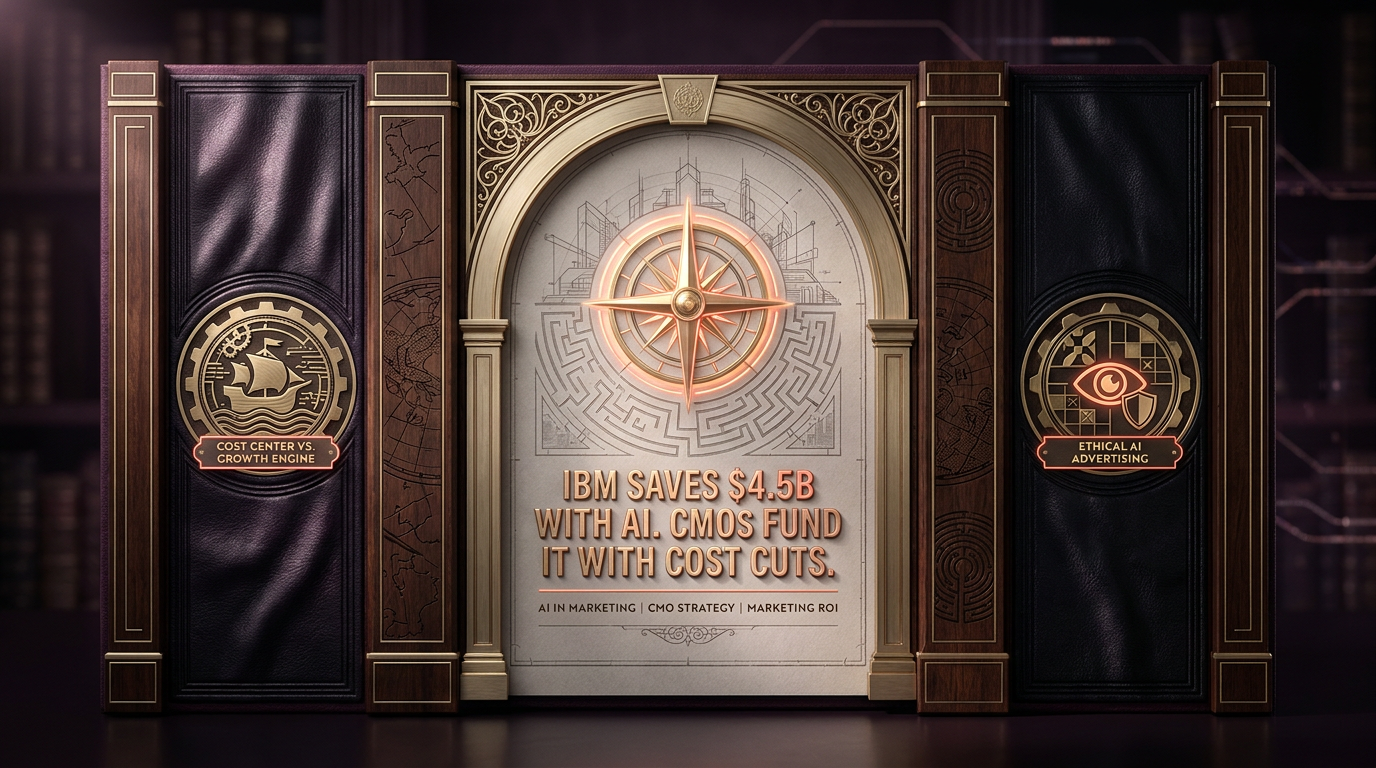
The Strategic Imperative: The core problem lies in a failure to translate marketing's impact into the language of the C-suite. As Marc, Host at Sleeping Barber, succinctly put it, "If you want to drive the growth agenda, you have to be part of the leadership team and not just the execution layer." This requires CMOs to move beyond campaign metrics and demonstrate direct contributions to revenue, margin, and enterprise value. Jonathan Adashek, SVP, Marketing and Communications at IBM, showcased this by detailing how IBM achieved $4.5 billion in AI-driven savings over three years while simultaneously increasing lead generation by 10-20% through AI optimization of events. This is a clear example of marketing leveraging technology not just for efficiency, but for optimized growth and expanded reach.
"Most CMOs are funding AI by cannibalizing their own budgets. I mean, there's a definite cost there, so they're banking savings wherever they can and then sending the money back to the CFO or whoever runs financing. And so they're not reinvesting necessarily in marketing."
— Marc, Host at Sleeping Barber
Reclaiming the Growth Narrative: The implication is stark: if marketing continues to define AI solely through the lens of cost-cutting and efficiency, it risks solidifying its perception as a cost center. Instead, the focus must shift to how AI, strategic branding, and creative execution drive new revenue streams, reduce customer acquisition costs over the long term, and build competitive moats. Maryam Banikarim, Chair, The Wall Street Journal CMO Council, observed a "Pivot from AI being a tool for efficiency to AI being a tool for growth and innovation," noting that it's "actually not that easy" to achieve just cost savings. This necessitates CMOs not just adopting AI, but proactively championing its revenue-generating capabilities to secure dedicated new budget lines rather than raiding existing ones. The future of the CMO role hinges on this strategic repositioning.
The Rundown
① Marketing's Internal Value Proposition is Eroding.
The price for agency services has declined by 75% in real terms since 2009, with workloads doubling, indicating that marketers often prioritize cost reduction over strategic value in their partnerships. (Michael Farmer on The WARC Podcast)
→ The Implication for CMOs: If your marketing organization participates in driving down agency value, you erode the perceived value of marketing itself within the enterprise, making it harder to advocate for your own strategic investments.
② Creator Effectiveness is a Creative, Not a Reach, Problem.
Only 29% of creator ads outperform average brand ads, and engagement rates have no correlation with brand memory lift; creativity and early branding are the key drivers of success. (Andrew Tindall on The WARC Podcast)
→ The Implication for CMOs: Stop chasing vanity metrics like engagement; prioritize strong strategic briefs and brand integration within the first two seconds of creator content to drive actual business outcomes.
③ CMOs Must Master Business Language to Secure a Seat at the Table.
A significant challenge for marketers remains translating their initiatives into business language before presenting internally, hindering their ability to engage with other C-suite executives on critical financial and growth objectives. (Sleeping Barber on Sleeping Barber - A Marketing Podcast)
→ The Implication for CMOs: Equip your team with P&L literacy; if you cannot articulate marketing's impact on balance sheets and income statements, your function will be perpetually viewed as a discretionary expense.
④ Fear-Based Marketing is a Brand Integrity Liability.
Digital advertising algorithms reward fear and loss messaging, leading to an "arms race" in wellness advertising that negatively impacts consumer mental health and brand trust. (Sarah Booth on That's What I Call Marketing)
→ The Implication for CMOs: While short-term conversions might spike, relying on manipulative tactics destroys long-term brand equity and makes your organization susceptible to public backlash and regulatory scrutiny.
⑤ The Sales Conversation Itself is a Strategic Asset.
In the sale of expertise, the sales conversation is a direct sample of the future engagement, meaning the manner in which you present your value fundamentally shapes client perception. (Blair Enns on Brand Master Podcast)
→ The Implication for CMOs: Train your sales and marketing teams to embody the expert persona from the first interaction; every touchpoint should reinforce your organization's unique value, not just its availability.
Signal Board
🔥 Heating Up
• AI for marketing effectiveness and growth: IBM achieved $4.5 billion in AI-driven savings over three years and expects another billion, while also cutting event numbers by half but increasing lead generation by 10-20% through AI optimization. (Jonathan Adashek on Marketing Vanguard)
• CMO's role is to protect the work and create conditions for creativity: Brent Smart emphasizes the importance of conviction, compelling storytelling, and emotional appeal when selling creative ideas within large organizations. (Brent Smart on Uncensored CMO)
• Effectiveness as a System (not a Scorecard): Traci Alford highlights that while organizations often focus on results, the upstream thinking (objectives, insight, creativity, learning) is crucial for true effectiveness. (Traci Alford on Sleeping Barber - A Marketing Podcast)
👀 On Watch
• The Four Conversations, a New Model for Selling Expertise 🆕: This framework helps creative firms establish authority and avoid giving away power for free by structuring sales interactions. (Blair Enns on Brand Master Podcast)
• Social Device 🆕: Repeatable creative frameworks owned by creators that drive engagement and brand fit. (Eugene Healey on The WARC Podcast)
• Five Thought Leadership Avatars 🆕: A framework for scaling ideas that categorizes thought leaders by their specific goals and formats, like the growth-minded CEO or the hall-of-fame thinker. (Bill Sherman on On Brand with Nick Westergaard)
• Electric Twin platform 🆕: A synthetic audience platform that achieves 92% accuracy in replicating human responses to ads, enabling marketers to understand emotional impacts instantly. (Leanne Tomasevic on That's What I Call Marketing)
❄️ Cooling Off
• Fear-based wellness advertising: Algorithms that created mental health crises are being used to sell wellness products by frightening consumers, doubling down on negative impacts. (Sarah Booth on That's What I Call Marketing)
• Impact of procurement on agency fees: Michael Farmer criticizes procurement for indiscriminately cutting fees, leading to a 75% real decline in the price for agency services since 2009. (Michael Farmer on The WARC Podcast)
The Tension
The tension this week centers on the true impact and ethical responsibility of digital advertising algorithms.
🏛️ The Status Quo Doctrine: The conventional wisdom, often driven by a singular focus on conversion rates and short-term metrics, has allowed algorithms to reward engagement-driving tactics, regardless of their emotional or societal impact. The pursuit of "upwards of a thousand ads for one of our products per year in one platform" (Sarah Booth, Chief Brand and Creative Officer at Ancient + Brave) indicates an environment where quantity and immediate clicks trump long-term brand health or consumer well-being.
🚀 The Challenger Doctrine: A growing counter-narrative, amplified by data from synthetic audiences, reveals the severe human cost of this algorithmic-driven approach. Leanne Tomasevic, Partnerships and Strategy Director at Electric Twin, demonstrated how fear-based wellness advertising makes consumers feel "grubby" and vulnerable, even while achieving high conversion. Sarah Booth on That's What I Call Marketing directly linked these "same algorithms that's created mental health crises in young people" to the sale of wellness products by frightening. This perspective argues for an ethical recalibration, where brand integrity and positive cultural influence are prioritized over algorithmic optimization for short-term gains.
The Advisor's Read: The data now clearly suggests that the short-term gains from algorithmically optimized, fear-based messaging come at a significant long-term cost to brand equity and societal trust, making this a C-suite ethical and financial risk, not just a marketing one.
The Bottom Line
The CMO's ascent requires a shift from proving marketing's value to positioning it as the indispensable engine of enterprise growth, measured in P&L impact, not just engagement.
Toolkit
The Five Thought Leadership Avatars Framework
Bill Sherman, COO of Thought Leadership Leverage, introduced a framework for scaling ideas by identifying five distinct thought leadership avatars, each with specific goals and preferred formats. This framework allows CMOs to strategically position and scale expertise within and outside their organization. Use these diagnostic questions to assess your team's approach to thought leadership:
1. Is your thought leadership content aligned with a specific avatar's goal (e.g., "growth-minded CEO," "impact and legacy executive")? (Bill Sherman on On Brand with Nick Westergaard)
2. Is your organization treating ideas as entities that need their own "platform identity" to become simple, accessible, and memorable? (Bill Sherman on On Brand with Nick Westergaard)
3. Are you actively developing the skills needed for thought leadership within your team, or are you waiting for natural experts to emerge? (Bill Sherman on On Brand with Nick Westergaard)
4. Does your thought leadership strategy go beyond mere activity to focus on specific, measurable business outcomes? (Bill Sherman on On Brand with Nick Westergaard)
📖 Want the full episode breakdowns, guest details, and listen links?
Quick Appendix
Brand Master Podcast: "315 | The End of Selling Expertise with Blair Enns" · 53 min · Featuring Blair Enns ▶ Listen · Apple Podcasts
Strategic Read: Essential for CMOs looking to elevate their teams from vendor to expert, offering frameworks for valuing intangible assets in client interactions.
CMO Confidential: "Maryam Banikarim | What CMO's Talk About Behind Closed Doors" · 36 min · Featuring Maryam Banikarim ▶ Listen · Apple Podcasts
Strategic Read: Crucial for CMOs navigating career pivots and understanding the evolving role from an efficiency-focused to a growth-and-innovation driver.
Marketing Vanguard: "Marketing Vanguard at Cannes: How IBM Became Its Own AI Case Study ft. Jonathan Adashek of IBM" · 15 min · Featuring Jonathan Adashek ▶ Listen · Apple Podcasts
Strategic Read: A must-listen for CMOs seeking to reframe AI from a cost-cutting tool to a growth and efficiency driver, exemplified by IBM's internal adoption.
On Brand with Nick Westergaard: "Five Thought Leadership Avatars for Scaling Ideas" · 32 min · Featuring Nick Westergaard, Bill Sherman ▶ Listen · Apple Podcasts
Strategic Read: Valuable for CMOs looking to systematize and scale the impact of their organization's intellectual capital and expert voices.
Sleeping Barber - A Marketing Podcast: "SBP 225: The PostPod - Lessons from Traci Alfford. Good Work Is a Habit Not a Score" · 27 min · Featuring Sleeping Barber, Traci Alford ▶ Listen · Apple Podcasts
Strategic Read: Important for CMOs focused on instilling a culture of continuous effectiveness and translating marketing impact into business language.
Sleeping Barber - A Marketing Podcast: "SBP 226: The Barber's Brief - The AI Efficiency Trap: When Doing More With Less Backfires" · 29 min · Featuring Marc, Vasilios ▶ Listen · Apple Podcasts
Strategic Read: Critical for CMOs evaluating AI investments and ensuring they drive revenue growth rather than simply proving marketing's dispensability.
That's What I Call Marketing: "TWICM 210: The Human Cost: How Fear-Based Wellness Advertising Makes People Feel" · 43 min · Featuring Conor Byrne, Sarah Booth, Leanne Tomasevic, Sarah, Leanne ▶ Listen · Apple Podcasts
Strategic Read: Essential for CMOs to understand the ethical implications of algorithm-driven advertising and its long-term impact on brand trust and consumer welfare.
The WARC Podcast: "Beyond vibes: Creator strategies to drive real effectiveness" · 37 min · Featuring Anna Hamill, Andrew Tindall, Eugene Healey, Eugene, Andrew ▶ Listen · Apple Podcasts
Strategic Read: Key for CMOs looking to move beyond vanity metrics in creator marketing to drive genuine brand memory and business impact.
The WARC Podcast: "Who murdered Madison Avenue?" · 45 min · Featuring Michael Farmer, David Tiltman ▶ Listen · Apple Podcasts
Strategic Read: Illuminating for CMOs seeking to understand the systemic economic pressures on agencies and the implications for strategic partnership and value creation.
Uncensored CMO: "How creativity transformed Australia’s No.1 Telecom’s brand - Brent Smart" · 54 min · Featuring Brent Smart, Jon Evans ▶ Listen · Apple Podcasts
Strategic Read: Inspiring for CMOs aiming to champion bold creative ideas within large organizations and leverage brand heritage for significant growth.
