
Hey Founders, VPs, and Brand Mavens,
Another week, another deep dive into the trenches of consumer brand building. You know the drill – the market is moving faster than your last-mile delivery, and if you’re not adapting, you’re eroding. This week’s Devotion is packed with insights from operators who’ve been there, done that, and are still navigating the beautiful chaos of scaling a brand.
We’re talking everything from dropping paid media to building retention engines in a multi-channel world, the brutal honesty of self-funding, and how customer experience beats everything else. Grab your coffee (or your Curious Elixir), because we’re closing out the week with a download that’ll fuel your next strategic move.
Let’s get it.
The Intake
This week, PodStreet delivered a solid 12 episodes across 10 unique podcasts, totaling 497 minutes of pure operator wisdom. We uncovered 0 emerging themes, but surfaced 20 actionable insights, and detected 1 healthy debate (because nothing worth doing is easy).
The Big Idea
The Unsexy Truth of Lasting Brand Value: Focus on Your Margins & Your Loyalists, Not Just Growth at All Costs
In a world clamoring for growth hacks and viral moments, the real operators are quietly optimizing for long-term value. This week, we heard a consistent drumbeat: the era of growth at all costs is over. The smart money (and the smart brands) are doubling down on profitability, margin protection, and turning customers into evangelists.
Look at what Amer Grozdanic, CEO of Praella Agency, articulated on The Unofficial Shopify Podcast. His agency dropped paid media entirely, focusing instead on controllable channels and direct traffic. This isn't just a contrarian stance; it's a strategic pivot born from burnout and a recognition that sustainable growth comes from channels you own, not ones you rent.
"I'm not a person that is always just going to go to Shopify and say, oh, that's my truth. I think we like it to be. Sometimes we imagine it is. But I think it's important to go to GA4, see what GA selling. It's important to go into triple whale and seeing how they're outputting things." — Amer Grozdanic, CEO of Praella Agency
This sentiment echoes what we heard from Muhammed Tüfekyapan, Founder of Growth Suite, on eCommerce Fastlane, highlighting the egregious margin loss from blind discounting. Stop giving discounts to customers who were already going to buy. Period. His solution, Growth Suite, uses first-party Shopify data to intelligently target "hesitant shoppers" with timed, single-use offers. This isn't just about saving money; it's about respecting your product's value and your brand's integrity.
"I think people are giving away a lot of margin right now when it's unnecessarily given away. With CAC being so high, people are margin squeezed right now and we're trying to be profitability." — Steven Hutt, Host, Founder, Strategic Advisor at eCommerce Fastlane
The lessons extend to the very foundation of your brand. Rea Ann Silva, Founder of Beautyblender, on Shopify Masters, shared her experience of failing to secure a patent. Her billion-dollar brand thrives because she focused on brand recognition and community, not legal protection. This is a cold, hard truth for founders: your brand IS your moat, especially when you're self-funded and operating lean.
"Brand recognition is almost as important as IP protection. IP protection is as good as you can afford to protect." — Rea Ann Silva, Founder of Beautyblender
And then there's the retention playbook. Jennifer Peters, Director of DTC, MarTech & Digital Compliance at OLLY, a Unilever brand, laid it out on Ecommerce Playbook. For a CPG giant sold everywhere, they're leveraging loyalty programs with receipt scanning to capture data from their 80% brick-and-mortar customers. This is an expensive, complex strategy, but it shows the commitment to understanding and retaining your core customer, regardless of where they convert.
"Not Every email and SMS can exclusively be about come buy now on.com when they have a much broader option for distribution." — Jennifer Peters, Director of DTC, MarTech & Digital Compliance at OLLY
Finally, John DiJulius hammered home on Customer Service Revolution: your customer experience differentiates you. Technology keeps you at pace, but your signature experience makes price irrelevant. This isn't fluffy talk; it's the operational truth that builds brands like Chick-fil-A and Ritz-Carlton. It's about consistency, empathy, and making sure that when you "drop the ball," you have a system to recover and build loyalty.
"Technology doesn't differentiate you. Technology keeps you at pace. Your signature experience is what makes price irrelevant." — John DiJulius, Founder and Chief Revolution Officer of The DiJulius Group
The takeaway? In DTC 3.0, the brands that win aren't just attracting new customers; they're fiercely protecting their margins, valuing their existing customers, and building an experience so consistent and compelling that it becomes their strongest marketing channel. It's less about the next shiny object and more about perfecting the fundamentals that drive sustainable, profitable growth.
Ideas in Brief
AI isn't the Silver Bullet, it's the Shovel: Uncovering and Solving Real Problems
The AI hype cycle is real, but smart operators are using it not for magic tricks, but for grinding out real-world problems. Laura Cantor, VP of Marketing & E-commerce at New York & Company, on DTC Podcast, revealed they found over 500 micro-issues on their live site using an AI QA tool. This wasn't about visionary AI, but about practical problem-solving at scale. Similarly, Monte Desai, Founder of Pixii.ai, on Ecommerce Coffee Break, showed how AI generates high-converting listing images, reducing ad spend and photoshoot costs. It’s about leveraging AI to do the tedious, data-heavy work that moves the needle on conversion and costs. The biggest lesson here? If you're chasing AI without a clear problem statement, you're just adding tech debt.
"AI is both the creation of and solution to so many of our problems. Because you went and used AI to Q&A 500 micro issues." — DTC Newsletter and Podcast, Host of DTC Newsletter and Podcast
Organic Advocacy is the New Influencer Marketing
The landscape of "influence" is shifting away from paid placements and towards genuine community. As Paul Archer and Verity Hurd discussed on Building Brand Advocacy, audience size is becoming irrelevant when 93% of social views are non-follower. The focus should be on building a network of authentic advocates – customers, creators, even employees – who genuinely love your brand. This means fostering relationships, recognizing "famous fans," and understanding that a true advocate is often cheaper to acquire than a new customer. It’s a shift from transactional campaigns to an evergreen engine of evangelism.
"Often it's a lot cheaper to advertise to advocates to become an advocate than it is to advertise to customers to become a customer." — Paul Archer
Your Website is Your #1 Sales Rep: Optimize Every Pixel
In the digital-first world, your website is often the first, and last, impression. Nik Sharma, on Limited Supply, made it clear: building brand is a culmination of 100,000 small things, done 1% better every day. This applies directly to your site. From descriptive iconography that increases revenue per session, to collection pages acting as educational landing pages, every element matters. And for those with complex catalogs, Paulius Nagys of LupaSearch, on Ecommerce Coffee Break, underlined the "patience gap" – customers abandon search after 2-5 attempts. Invest in AI-powered site search that understands intent, not just keywords, to close that gap and convert more high-intent shoppers.
"Building brand is a culmination of 100,000 things done at a very small level. Like doing things 1% better over time. Every day, all day, all the time, in every channel, at every touch point. That's how you build brand." — Nik Sharma, Host of Limited Supply
"70% of E commerce search tools fail on a simple queries. Imagine a customer walks into a store looking for a couch. But your database only has sofas. And in physical world a salesperson would say right this way in digital world search bar says no result and customer leaves instantly." — Paulius Nagys, Co-founder at LupaSearch
The Tension
Bootstrapping vs. VC: The Long Game vs. The Fast Burn
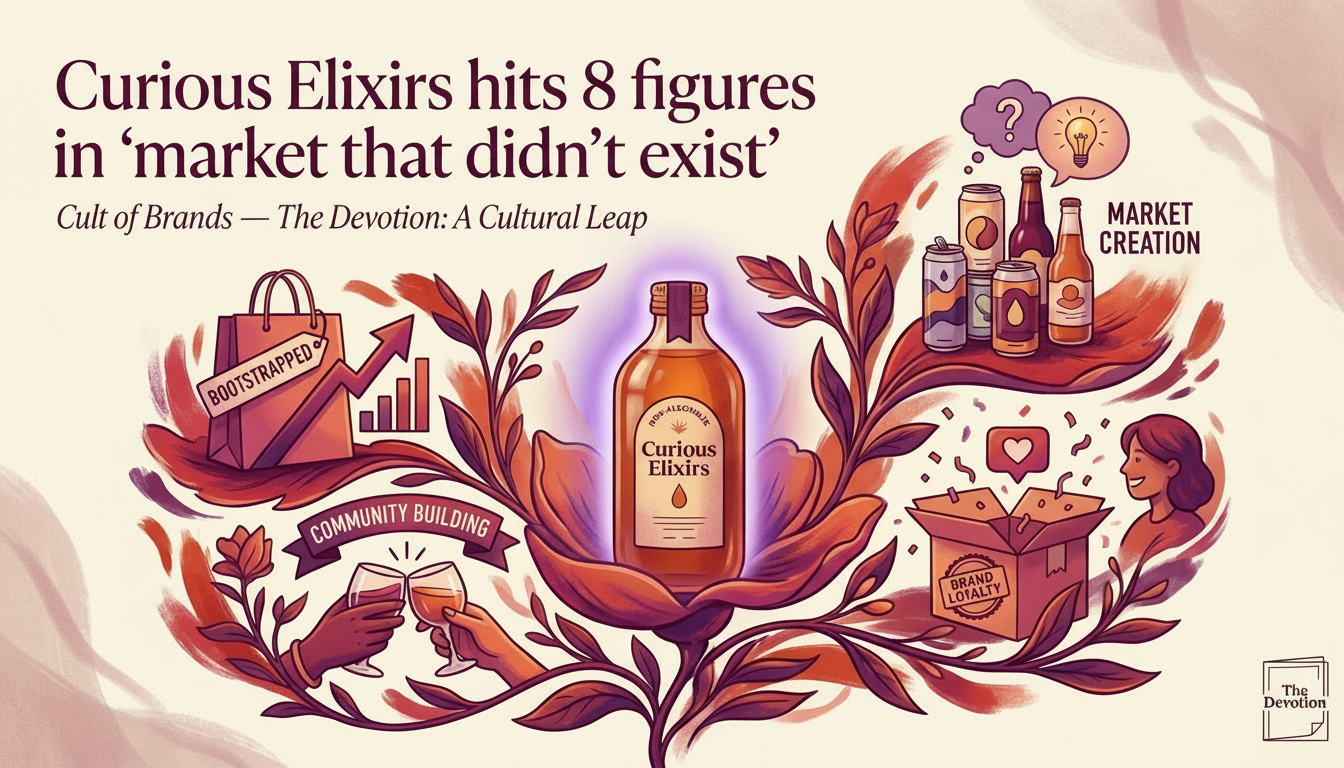
This week highlighted a classic tension: the self-funded, mission-driven approach versus the venture-backed sprint. J.W. Wiseman, Founder of Curious Elixirs, on Shopify Masters, bluntly stated: "Once you take the money, it by definition changes things. You know, you can't really be loyal to two missions. Is it the mission or is it the money?" His brand hit eight figures in a market that literally didn't exist, all while bootstrapping and prioritizing mission over explosive, capital-fueled growth.
"Once you take the money, it by definition changes things. You know, you can't really be loyal to two missions. Is it the mission or is it the money?" — J.W. Wiseman, Founder of Curious Elixirs
This stands in contrast to the VC-dependent narrative that dominated DTC 1.0 and 2.0. While venture capital can provide the fuel for rapid scaling, it often comes with pressure to prioritize market share over profitability and to exit quickly. The "DTC 3.0" era, as discussed by Nate Checketts and Melissa Mash on The Modern Retail Podcast, is about building sustainable, profitable businesses with a longer time horizon, often enabled by patient capital or self-funding.
"I want to build a brand that I think has a real value in its mission and the quality of the products, in the way it enriches the lives of the team and our partners. And in order to do that, I need a different Time Horizon investor." — Nate Checketts, Co-founder and CEO of Rhone
The tension lies in the trade-offs: speed and access to capital versus control and mission alignment. For many operators, the grind of bootstrapping, painful as it is, buys you the freedom to build the brand you truly envision, without external pressures dictating your priorities or timeline. It's a choice that defines not just your balance sheet, but your brand's soul.
The Convert
This week, we're making Curious Elixirs our convert. J.W. Wiseman built an eight-figure brand in a non-existent market (non-alcoholic craft cocktails) through sheer force of will, bootstrapping, and an unshakeable belief in his mission. By focusing on deep community building—hosting 173 simultaneous decentralized cocktail parties—he fostered loyalty and word-of-mouth that funded growth without needing external capital. This brand exemplifies how a powerful mission and genuine connection can create a market and turn customers into evangelists.
Appendix
1. The Unofficial Shopify Podcast: "Why This Agency Dropped Paid Media (And Got Bigger)"
Guests: Kurt Elster (Host, The Unofficial Shopify Podcast), Amer Grozdanic (CEO, Praella Agency), Amer Grazdonic (Founder, Pralla)
Runtime: 77m | Vibe: The Unpaid Path to Profit
Key Signals:
- No Paid Media, More Profit: Praella Agency grew big by focusing exclusively on "on-site" Shopify optimization and direct channels, dropping paid media due to burnout and seeking more controllable growth. This contrarian approach highlights the diminishing returns and increasing complexity of paid channels for agencies.
- Shopify for the Win: Going all-in on Shopify dramatically reduced project timelines and costs compared to platforms like Magento, leading to more enjoyable and efficient client engagements and better client relationships.
- Community-Built Growth: The agency's success was significantly propelled by a network of friendly agencies and partners who sent leads, illustrating the power of genuine industry connections and community over traditional competitive strategies.
"I think one thing I realized, you have to be very direct and very honest. You can take a seat back if you feel passionate about something. Alan and I, I don't know if you're the same with Paul, but like, we will get into a shouting match, like in a very passionate, good way." — Amer Grozdanic, CEO of Praella Agency
2. DTC Podcast: "Ep 586: Laura Cantor: Digital Transformation, AI Collaboration, and Why We're All Failing Calculus Together"
Guests: Laura Cantor (VP of Marketing & E-commerce, New York & Company), DTC Newsletter and Podcast (Host, DTC Newsletter), Eric Dick (Host, DTC Newsletter and Podcast)
Runtime: 52m | Vibe: Legacy Retail's AI Pivot
Key Signals:
- Back to Basics (for Agility): New York & Company pivoted from a headless Shopify Hydrogen setup back to Liquid, prioritizing agility and simpler integration over the perceived sophistication of headless. This indicates a strategic shift towards maintainability and speed in digital transformation, even for large brands.
- AI as a Problem Finder: An agentic AI QA tool (Zent AI) uncovered over 500 micro-issues on their live site, highlighting the limitations of traditional QA and the power of AI in diagnosing previously unseen problems.
- Personal Branding as Professional Survival: A viral LinkedIn post about a technical retail replatforming showed that candid, practical problem-solving discussions (especially about AI) resonate deeply, indicating an unmet industry need for honesty over hype.
"We're all failing the calculus class together. We are, this is AI. We are in one giant study group and it's not like we should or can necessarily hang out on our own island and think that we're going to conquer these massive undertakings and shifts in, in the way that we do business." — Laura Cantor, Guest on DTC Newsletter and Podcast
3. Shopify Masters: "The Problem Every Makeup Artist Faces And How I Turned It Into Millions"
Guests: Rea Ann Silva (Founder, Beautyblender), Adam Lavinter (Host, Shopify), Rhiannon (Founder, Beautyblender)
Runtime: 44m | Vibe: The Sponge That Built a Fortune
Key Signals:
- Brand Over Patent: Despite failing to patent Beautyblender, Rea Ann Silva built a multi-million dollar global brand by heavily investing in brand recognition and community, proving that a strong brand can be a more powerful defense against imitators than legal protection.
- Self-Funded Grit: The brand remains completely self-funded, a rare feat for a business of its size, with the founder not paying herself for eight years. This showcases extreme dedication and a focus on compounding internal growth.
- Embracing Competition: Initially struggling with "knockoffs," Silva learned to use competition to reinforce Beautyblender's unique story and category-creator status, leveraging it as a marketing tool.
"I didn't pay myself for about eight years. If I paid myself first, probably wouldn't have a business." — Rea Ann Silva, Founder of Beautyblender
4. Ecommerce Coffee Break – The Ecom Marketing & Sales Podcast: "How to Turn Your Product Listing Into a Selling Machine — Monte Desai | Why Bad Designs Lose Sales, How AI Speeds Up Design, What Drives Higher Conversion Rates, Why Constant Listing Updates Matter, How AI Automates Creative Strategy (#464)"
Guests: Claus Lauter (Host, Ecommerce Coffee Break – The Ecom Marketing & Sales Podcast), Monte Desai (Founder, Pixii.ai)
Runtime: 21m | Vibe: AI-Powered Listing Overhaul
Key Signals:
- Design's Hidden Impact: Many listings fail not because of the product, but poor design, leading to significant lost sales that brands often overlook. Improving listing visuals can drastically increase conversion rates and reduce ad spend.
- AI for Visual Optimization: Pixii.ai, an AI tool, generates high-converting, editable images and full creative strategies in minutes, trained on top Amazon listings. This rapidly scales product visual optimization across many SKUs, saving time and money on traditional photoshoots.
- Constant Refresh is Key: Due to changing algorithms and consumer behavior, constant listing refreshes are necessary to maintain performance. AI automates this, ensuring listings remain optimized and competitive without manual effort.
"Most listings don't fail because of the product. They fail because of the design." — Claus Lauter, Host of Ecommerce Coffee Break – The Ecom Marketing & Sales Podcast
5. Ecommerce Playbook: Numbers, Struggles & Growth: "How OLLY Built a Retention Engine for a Brand Sold Everywhere"
Guests: Taylor (Host, Common Thread Collective), Jennifer Peters (Director of DTC, MarTech & Digital Compliance at OLLY, OLLY (a Unilever brand)), Jennifer (Head of Marketing Technology, OLLY)
Runtime: 33m | Vibe: CPG Retention Mastery
Key Signals:
- Receipt Scanning for Data Capture: OLLY, a CPG brand with 80% brick-and-mortar customers, uses receipt scanning within its loyalty program to capture essential customer data, bridging the gap between retail and DTC insights.
- Segmented KPIs for Multi-Channel: Instead of broad conversion rates, OLLY uses segmented KPI measurement across channels, understanding that not every email should push DTC when retail is a major sales driver.
- AI for Proactive Segmentation: AI is proactively identifying new, overlooked high-value customer segments (e.g., 45-55 year old women investing heavily in supplements), solving problems and revealing opportunities before internal teams fully recognize them.
"Probably 80% of our revenue and customers are shopping in brick and mortar stores. What we've decided to do is to really leverage our loyalty program to try to capture that data." — Jennifer Peters, Director of DTC, MarTech & Digital Compliance at OLLY
6. Building Brand Advocacy: "The 3‑Step Framework to Organic Brand Advocacy in 2026"
Guests: Paul Archer (Host), Verity Hurd (Host), Paul (Host, Building Brand Advocacy), Verity (Host, Building Brand Advocacy)
Runtime: 27m | Vibe: Post-Influencer Advocacy
Key Signals:
- Death of Traditional Influencer Marketing: The focus on audience size and one-off influencer campaigns is outdated, particularly as 93% of social views are non-follower. The future is about authentic, ongoing advocacy.
- Organic Advocacy Engine: Brands need to build a network of genuine advocates (customers, creators, employees) through a three-step framework: "Who" (map your brand network), "Activities" (engage them), and "Rewards" (incentivize).
- Employee Advocacy's Untapped Potential: By 2026, employee advocacy will become a credible marketing channel beyond internal comms, driving authentic messaging and local footfall, if brands can overcome hurdles like incentivization across departments.
"people are hunting out realness. Right? And that if you think about it, why would someone search TikTok search for a brand? Well, it's because they want to hear what real people have to say about that brand." — Verity Hurd
7. Ecommerce Coffee Break – The Ecom Marketing & Sales Podcast: "How To Turn Site Search Into A High-Performing Revenue Engine — Paulius Nagys | Why Complex Catalogs Need AI, Why Patience Gaps Kill Sales, How AI Matches Search Intent, Why Search Bars Provide Feedback, What Vector Search Actually Does (#463)"
Guests: Claus Lauter (Host, Ecommerce Coffee Break – The Ecom Marketing & Sales Podcast), Paulius Nagys (Co-founder, LupaSearch)
Runtime: 22m | Vibe: Search Bar as Revenue Engine
Key Signals:
- The "Patience Gap" Killer: 80% of online shoppers abandon a site when they can't find products, giving only 2-5 chances. Poor site search is a silent revenue killer, especially for complex catalogs.
- AI for Intent Matching: LupaSearch uses AI to understand search intent by "matching meaning" (vector search) rather than just keywords, significantly closing the patience gap and converting more shoppers.
- Search Bars as Feedback Channels: Site search bars provide crucial, real-time feedback on customer behavior and intent. Brands should leverage this data to optimize not just search, but product offerings and content.
"According to Forrester, they say 80% of online shoppers abandon search when they can't find products. We found that customer gives only two to five chances before they bounce to competitor and we are calling it patient gap. So it's a silent revenue killer." — Paulius Nagys, Co-founder at LupaSearch
8. eCommerce Fastlane: Shopify Growth Strategies—Where AI Efficiency Meets Human Connection: "Stop Giving Discounts To Customers Who Were Already Going To Buy"
Guests: Steven Hutt (Host, Founder, Strategic Advisor, eCommerce Fastlane), Muhammed Tüfekyapan (Founder, Growth Suite)
Runtime: 41m | Vibe: Smart Discounts to Save Margins
Key Signals:
- The Blind Discount Wasteland: Many e-commerce businesses lose significant margin by offering discounts to customers who would have purchased anyway, or to discount aggregators, rather than targeting key conversion points.
- Behavior-Driven Targeting: Growth Suite uses first-party Shopify data to track real-time customer behavior, differentiating between "hesitant shoppers" (walk-away customers) and "dedicated buyers" to offer targeted, single-use, timed discounts only when needed.
- Preventing Coupon Leakage: By offering dynamic, single-use, and time-limited codes, the system prevents coupon leakage to aggregators like Honey, preserving margins and ensuring discounts drive incremental sales.
"What we are doing is we are waiting until the customer is it think like they are not going to buy in that session. When we see that grocery starts to make something if it doesn't see that pattern, it just waits patiently." — Muhammed Tüfekyapan, Founder at Growth Suite
9. Limited Supply: "S15 E7: More Website Design Lessons From the Best Brands"
Guests: Nik Sharma (Host, Limited Supply)
Runtime: 47m | Vibe: Pixel-Perfect Brand Building
Key Signals:
- Every Pixel Builds Brand: Small UX details, like descriptive iconography and even loading screens, contribute significantly to brand equity and conversions. Building brand is a sum of 100,000 small, consistently optimized efforts.
- Collection Pages as Landing Pages: Collection pages should be treated as educational landing pages, not just product grids. Optimize them with engaging content, clear messaging, and strong SEO to drive both discovery and conversion.
- Set Clear Expectations for Subscriptions: Especially for supplements, brands must clearly communicate what customers can expect over the first 90 days. This transparency builds trust and reduces churn by mitigating unmet expectations.
"I still think collections pages are landing pages to some degree. You want to make it educational as well as easy to shop." — Nik Sharma, Host of Limited Supply
10. Customer Service Revolution: "241: CX Strategy Blueprint Part 1: The Proven Framework That Chick-fil-A, Starbucks & Ritz-Carlton Use to Dominate Customer Experience"
Guests: John DiJulius (Founder and Chief Revolution Officer, The DiJulius Group)
Runtime: 42m | Vibe: CX as a System, Not an Art
Key Signals:
- CX is a System, Not Luck: World-class customer experience is not about budget or luck, but a systematic, codified framework. Companies like Chick-fil-A and Starbucks achieve excellence through meticulously defined and repeatable processes.
- Consistency is Key: The #1 CX problem is inconsistency, stemming from varied employee interpretations of "great service." Brands must define service expectations clearly, making them trainable, observable, measurable, and actionable.
- Signature Experience Differentiates: Technology only keeps you competitive; your unique "signature experience" is what differentiates your brand and makes price irrelevant. This involves deep journey mapping and "above and beyond" moments.
"The number one CX problem is consistency — and the root cause is 100 different personal interpretations of what great service means." — John DiJulius, Founder and Chief Revolution Officer of The DiJulius Group
11. Shopify Masters: "How Curious Elixirs Reached Eight Figures in a Market That Didn’t Exist"
Guests: Serena Smith (Host, Shopify), JW Wiseman (Founder, Curious Elixirs), J.W. Wiseman (Founder, Curious Elixirs)
Runtime: 39m | Vibe: Bootstrapping a Category Creator
Key Signals:
- Mission Over Money (and VC): Curious Elixirs hit eight figures while bootstrapping, prioritizing its mission and avoiding external capital to maintain control and authenticity. This challenges the common startup narrative of needing VC for scale.
- Community as Marketing: The brand leverages hospitality-first events, like the "Great Curious Cocktail Party" (173 simultaneous events), to foster in-person and digital community, driving brand awareness and loyalty more effectively than traditional ads.
- Creating the Market: Wiseman identified a massive unmet need (165M Americans not drinking or drinking less) and built a sophisticated alcohol-free option, proving that category creation through deep customer understanding can lead to significant success.
"75 million adult Americans don't drink alcohol at all. And another 90 million have two or fewer drinks per week. That's a crazy number. 165 million people total there, adult Americans who don't drink or are drinking less." — JW Wiseman, Founder of Curious Elixirs
12. The Modern Retail Podcast: "The dawn of DTC 3.0"
Guests: Gabriela Barkho (Senior Reporter, Modern Retail), Nate Checketts (Co-founder and CEO, Rhone), Melissa Mash (Co-founder and CEO, Dagne Dover)
Runtime: 52m | Vibe: DTC's Sustainable Evolution
Key Signals:
- DTC 3.0 is Sustainable Growth: The new era emphasizes building solid, profitable businesses with a focus on long-term value, customer relationships, and adaptability, rather than rapid, venture-backed expansion.
- Patience Capital Wins: Brands like Rhone and Dagne Dover prioritized patient capital (or no VC) to realize a 10+ year brand-building vision, contrasting with the short-term pressures of traditional venture funding.
- Physical Retail's Evolution: "Physical retail didn't die, it changed." Thoughtful brick-and-mortar strategies and wholesale partnerships are crucial for mature DTC brands, moving beyond the direct-to-consumer-only model.
"I think that DTC 3.0 really means sort of this era that we're living in, obviously post Covid, obviously post tariffs. And in my mind, the ones who are in a position of strength going into this period are really those who have built solid businesses." — Melissa Mash, Co-founder and CEO of Dagne Dover