
The CMOs who will lead tomorrow's enterprises are redefining marketing as a business function rooted in kindness and tangible customer value, not just campaigns.
The Intake
📊 8 episodes across 8 podcasts
⏱ 302 minutes of intelligence analyzed
🎙 Featuring: Kory Marchisotto (e.l.f. Beauty), Jon Evans (Uncensored Renegades), Amy Rodgers (WARC Creative), Marco Venturelli (Publicis Conseil)
One Big Thing
The New Imperative: "Kindness" as a Strategic Business Accelerant
Marketing leaders are increasingly challenged to generate growth beyond traditional campaign metrics, and this week's intelligence reveals a counter-intuitive yet potent strategy: operationalizing kindness. Far from being a soft skill, genuine kindness—distinct from passive niceness—is emerging as a strategic differentiator that fosters loyalty, collaboration, and even drives financial performance. Kory Marchisotto, Chief Marketing Officer of e.l.f. Beauty, championed this ethos, describing her company as "a bold disruptor with a kind heart." This isn't corporate platitude; it's a deeply embedded business principle influencing everything from internal culture to competitor engagement. Marchisotto explicitly detailed how e.l.f. collaborates with perceived rivals like Beekman 1802 to learn about kindness, an approach that defies conventional competitive wisdom.
"The widely held belief is that we have to be at war with our competitors. And actually our kind heart takes us in the opposite direction. We actually force multiply with people in our orbit."
— Kory Marchisotto, Chief Marketing Officer of e.l.f. Beauty on Uncensored Renegades
This commitment to kindness extends to difficult decisions, challenging the notion that kindness always means being "nice." Marchisotto clarified that "being kind is letting them go" when an employee is not in the right role, highlighting that true kindness prioritizes long-term organizational and individual well-being over short-term discomfort. This framework positions kindness not as a deviation from business objectives but as an integral component, impacting everything from talent retention to brand perception and customer engagement. The scientific backing—that kindness can lead to epigenetic changes and alterations in human DNA—underscores its profound, systemic impact, transforming it from a mere gesture into a foundational operating principle for disruptive brands (Kory Marchisotto on Uncensored Renegades).
The Rundown
① Customer obsession demands frontline integration, not just data. Organizations that truly embed customer obsession move beyond dashboards to integrate marketing with customer-facing teams, leveraging tools like Gong for call analysis while retaining human judgment. (Nikhil Chawla on Renegade Marketers Unite)
→ The Implication for CMOs: Embed your marketing team directly into customer and sales team conversations weekly, inviting customers to monthly all-hands meetings to ground strategy in real-world feedback.
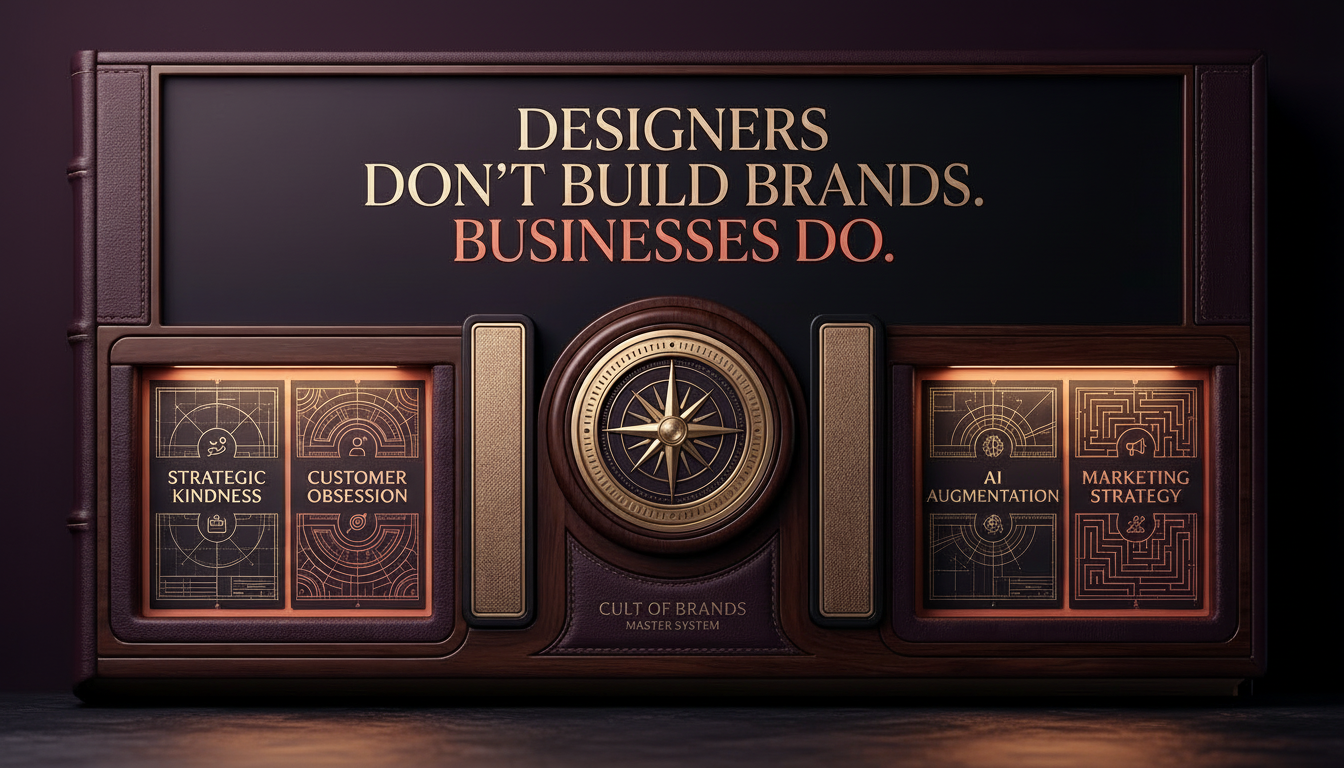
② Designers don't build brands; businesses do through consistent value and trust. Kevin Finn, founder of TheSumOf, argues that designers often overstate their role, as true brand building is a long-term accumulation of meaning and trust earned through a business's tangible value. (Kevin Finn on JUST Branding)
→ The Implication for CMOs: Challenge your brand and design teams to articulate precisely how their work contributes to long-term trust and customer alignment, rather than focusing solely on visual identity.
③ Unlocking growth in declining categories requires re-imagining consumption occasions and emotional engagement. While the overall wine category declines, Archer Roose, a canned wine brand, is experiencing significant growth (up 41%) by redefining wine for Gen Z with humor and strategic partnerships over formal education. (Conley Downing on Marketing Vanguard)
→ The Implication for CMOs: Conduct qualitative research to identify overlooked emotional triggers and consumption contexts that can redefine your category's appeal to emerging demographics, even if the broader market is shrinking.
④ Transforming intangible brands into tangible experiences relies on curated moments, not grand spectacles. Joanna Badamo (Agency EA) highlights that creating immersive environments for digital brands requires storytelling and data-driven insights to craft smart, resonant moments that surprise and engage. (Joanna Badamo on On Brand with Nick Westergaard)
→ The Implication for CMOs: Prioritize design and experiential activations that create intimate, memorable interactions over large-scale, generic events, ensuring each touchpoint reinforces the brand narrative and customer journey.
⑤ AI's true value for knowledge workers lies in augmentation through mystery-solving, not algorithmic substitution. Roger Martin (Rotman School of Management) proposes that as AI excels at algorithmic tasks, humans must shift to solving mysteries and developing heuristics to avoid being replaced, viewing organizations as "Decision Factories." (Roger Martin on Sleeping Barber - A Marketing Podcast)
→ The Implication for CMOs: Reorient team training and workflows to focus on identifying and solving complex strategic "mysteries" and developing adaptive "heuristics," ensuring AI serves as an augmentative collaborator rather than a replacement for judgment.
Signal Board
🔥 HEATING UP
• Vulnerability as a leadership skill: The ability to admit "I don't know" and give credit away is viewed as a significant strength, especially in fostering kind, collaborative environments. (Jon Evans on Uncensored Renegades)
• Humor-led marketing in a formal category: Archer Roose achieves substantial growth by prioritizing humor and emotional engagement over traditional educational content in the often-stuffy wine industry. (Conley Downing on Marketing Vanguard)
• Domestic violence as an insurable risk: AXA’s award-winning "Three Words" campaign demonstrates how integrating social issues directly into product offerings can drive both commercial success and significant social impact. (Alice Holzman on The WARC Podcast)
🆕 ON WATCH
• Creative business transformation in financial services: AXA's bold move to embed domestic violence protection into home insurance policies signals a shift in how financial institutions can leverage their core offerings for social good. (Alice Holzman on The WARC Podcast)
• Project-Based Organizations: Critiqued as more efficient decision factories than traditional corporate structures that waste capacity. (Roger Martin on Sleeping Barber - A Marketing Podcast)
• AI as a 'wheel greaser': AI is quietly becoming a foundational, ubiquitous technology, enhancing efficiency and concept development for creative teams without replacing human judgment. (Joanna Badamo on On Brand with Nick Westergaard)
🧊 COOLING OFF
• NPS (Net Promoter Score) as a solitary metric: Critiqued for being a flawed measure when used purely as a score, rather than as a "net promoter system" for deeper customer insights. (Nikhil Chawla on Renegade Marketers Unite)
• Designers overstating brand-building capabilities: The conventional notion that designers solely build brands is being challenged, with true brand-building being attributed to consistent business delivery and earned trust over time. (Kevin Finn on JUST Branding)
The Tension
The role of designers in brand building is a frequent point of misunderstanding and debate, with implications for how marketing leaders engage creative partners.
🏛️ The Status Quo Doctrine: The prevailing view, often perpetuated by the design industry itself, is that designers are the architects of brands. This leads to an overemphasis on visual identity and branding systems as the primary drivers of brand equity. As Kevin Finn, Founder of TheSumOf, notes, "What I have a problem with is when branding designers decide they want to take sole credit for building a brand because they created a branding system." This perspective often elevates the logo and superficial elements as paramount.
🚀 The Challenger Doctrine: A more nuanced perspective asserts that designers create branding elements, but businesses, through consistent delivery, earned trust, and accumulated meaning, are the true brand builders. Finn emphasizes that "The reality is that the brand gives the logo its value, not the other way around." This doctrine posits that a brand is a recognizable reputation built when customers align their personal identity with a business that delivers tangible, relevant value over time, not merely through aesthetic design.
🗣️ The Advisor's Read: The evidence strongly suggests that while design enables brand expression, the core value and identity of a brand are built through sustained business actions and customer relationships, necessitating a strategic shift in how CMOs leverage design talent.
The Bottom Line
Today's marketing leaders must embrace strategic kindness, embed customer obsession, and redefine creativity to drive business value and competitive differentiation—or risk being outmaneuvered by challengers integrating these insights across their enterprise.
Your Move
1. Audit your "kindness quotient": Assess where genuine kindness—not just niceness—can be strategically embedded within your marketing operations, from internal team dynamics to customer interactions and even competitive approaches. Can you apply the "kindness curriculum" that e.l.f. Beauty uses?
2. Redefine "customer obsession" beyond metrics: Move your team beyond NPS scores to direct, qualitative customer conversations. Integrate marketing team members into customer and sales team stand-ups to build real empathy and uncover hidden "mysteries" to solve.
3. Challenge your creative partners: Ask your designers and agencies how their work directly contributes to long-term trust and business value, rather than just aesthetic appeal or campaign delivery. Shift the conversation from "branding system" to "brand reputation."
4. Identify your category's overlooked "occasions": Analyze if your brand or category is constrained by traditional perceptions of use. Take a cue from Archer Roose and explore how redefining consumption occasions or emotional connections could unlock growth with new demographics.
Toolkit
Roger Martin's "Decision Factory" Diagnostic for CMOs:
Roger Martin's framework suggests viewing your organization as a "Decision Factory" that produces choices, rather than just campaigns. Use these questions to diagnose your team's effectiveness in leveraging human judgment and AI:
1. Mystery Identification: What are the biggest, most complex strategic "mysteries" currently facing your marketing organization, and how much dedicated time is allocated to solving them vs. executing known tactics?
2. Heuristic Development: How effectively do your teams convert newly solved mysteries into repeatable "heuristics" (rules of thumb or best practices) that improve future decision-making, and are these documented and shared?
3. Algorithmic Leverage: Where are you using AI and automation purely for "algorithmic" tasks (e.g., ad buying, content generation) that could free up human capacity for mystery-solving and heuristic development?
4. Human Augmentation vs. Substitution: Are your AI integrations primarily augmenting human judgment and creativity, or are they subtly nudging your team towards substituting human thought with modal, "average" solutions?
5. Reflection & Learning Loop: What formal processes exist to encourage teams to reflect on past decisions, understand what worked (and why), and use these insights to refine heuristics or identify new mysteries?
This diagnostic from Roger Martin on Sleeping Barber - A Marketing Podcast helps CMOs re-evaluate their operational structure to maximize strategic output and human-AI collaboration.
📖 Want the full episode breakdowns, guest details, and listen links?
Quick Appendix
Uncensored Renegades: "The power of kindness (while being a disruptor)" · 24 min · Featuring Kory Marchisotto
CMO Briefing: Essential for leaders seeking to integrate ethical conduct with aggressive market disruption, offering a framework for kindness as a competitive advantage. ▶ Listen
On Brand with Nick Westergaard: "Making Intangible Brands Tangible" · 31 min · Featuring Joanna Badamo
CMO Briefing: Crucial for marketers of digital-first brands looking to create impactful physical experiences that resonate deeply without breaking the budget. ▶ Listen
Uncensored CMO: "The power of kindness with Kory Marchisotto [Uncensored Renegades]" · 24 min · Featuring Kory Marchisotto
CMO Briefing: Highly relevant for CMOs grappling with employee retention and fostering a positive culture, demonstrating how genuine kindness can be a powerful business driver. ▶ Listen
The WARC Podcast: "WARC Rankings: AXA's 'Three Words' wins the Creative 100" · 35 min · Featuring Amy Rodgers
CMO Briefing: A must-listen for leaders aiming to balance commercial objectives with social impact, showcasing how purpose-driven campaigns can yield significant bottom-line results. ▶ Listen
Renegade Marketers Unite: "509: The Real Work of Customer Obsession" · 49 min · Featuring JD Dillon
CMO Briefing: Vital for marketers looking to move beyond superficial customer-centricity, providing actionable strategies for integrating customer insights directly into go-to-market strategies and organizational structures. ▶ Listen
JUST Branding: "S07.EP04 - Designers Don’t Build Brands with Kevin Finn" · 58 min · Featuring Kevin Finn
CMO Briefing: Important for any CMO who manages creative teams, offering a critical perspective on the true nature of brand building and the strategic role of design in a post-AI world. ▶ Listen
Marketing Vanguard: "How Archer Roose Is Flipping the Wine Industry on Its Head with CMO, Conley Downing" · 19 min · Featuring Conley Downing
CMO Briefing: Essential for leaders in declining or commoditized markets, illustrating how innovative positioning and emotional engagement can drive outsized growth against industry trends. ▶ Listen
Sleeping Barber - A Marketing Podcast: "SBP 182: The Decision Factory: AI’s Missing Manual. With Roger Martin" · 62 min · Featuring Roger Martin
CMO Briefing: Critical for marketing executives preparing their teams for the age of AI, offering a framework to reorient work towards mystery-solving and heuristic development to augment, not replace, human intelligence. ▶ Listen